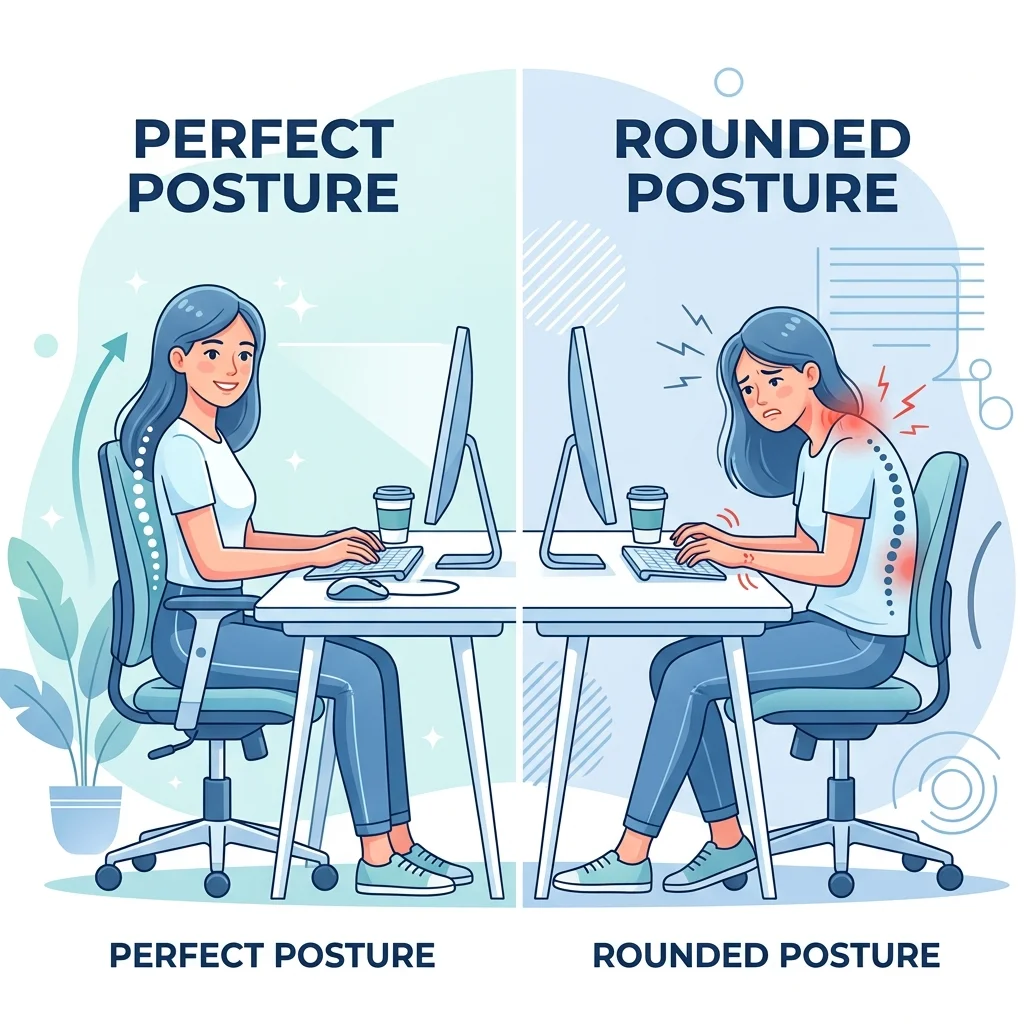
Many office workers and remote professionals spend 8 to 10 hours a day sitting in front of a computer. Over time, poor desk setup leads to chronic neck stiffness, shoulder tension, headaches, and lower back aches. Correcting your setup is the first step to pain-free workdays.
Simple Steps for the Best Seated Posture
You do not need expensive, high-tech equipment to improve your posture. Just follow these simple setup rules at your home or office workspace:
- Screen Height: Position the top of your computer monitor at eye level. This stops you from constantly bending your neck forward, which multiplies the load on your spine.
- Chair Position: Adjust your chair height so your feet are flat on the floor and your thighs are parallel to the ground. Your knees should sit at a comfortable 90-degree angle.
- Elbow Support: Keep your keyboard close enough so your elbows bend at 90 degrees and rest comfortably by your side, reducing strain on your upper trapezius muscles.
- Lower Back Support: Use a chair with lumbar support or place a small cushion or rolled towel behind your lower back to maintain the natural curve of your spine.
The 20-20-2 Rule for Desk Health
To prevent your joints from stiffening and your muscles from tightening, follow the 20-20-2 rule throughout your workday:
- Every 20 minutes, look at an object 20 feet away for at least 20 seconds to rest your eye muscles.
- Stand up and walk or stretch for 2 minutes to restore blood circulation and reset your spinal posture.
Simple Desk Exercises to Try
- Chin Tucks: Look straight ahead. Gently pull your chin backward (like making a double chin) without tilting your head. Hold for 5 seconds. Repeat 10 times to relieve upper neck strain.
- Shoulder Rolls: Slowly roll your shoulders backward in circles 10 times every hour to open up chest muscles and reduce shoulder tension.
- Gentle Standing Extension: Stand up, place your hands on your lower back, and gently bend backward. Hold for 3 seconds to reverse the flexed sitting posture.
Take Action Today
If you continue to experience neck and shoulder pain, consult a clinical physiotherapist. A professional assessment can identify muscle imbalances and help you create a personalized stretching routine. At PhysioPulse, we design custom corporate wellness programs to keep professionals active and pain-free.
Experience Professional Recovery
Suffering from pain or recovering from a sports injury? Book a clinical consultation, a home visit, or a video call session with our team of SLMC registered physiotherapists.