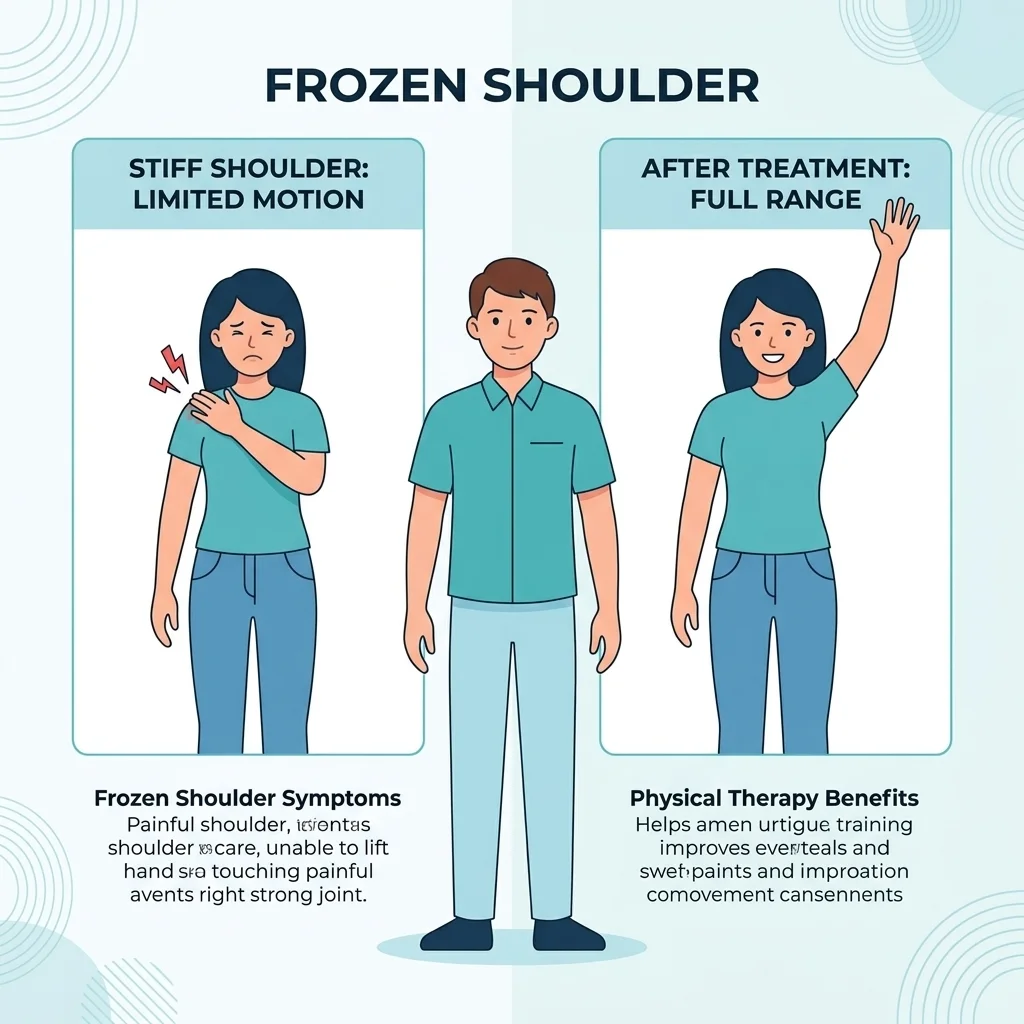
Frozen shoulder (medically called adhesive capsulitis) is a painful condition where the shoulder joint becomes stiff and difficult to move. It is common in adults aged 40 to 60, especially women and patients with metabolic conditions like diabetes.
The Three Stages of Frozen Shoulder
A frozen shoulder develops slowly and goes through three distinct phases:
- The Freezing Stage (Months 2–9): The shoulder starts to hurt, especially at night when sleeping. The range of motion slowly decreases. This is usually the most painful stage because the joint capsule is highly inflamed.
- The Frozen Stage (Months 4–12): The pain might start to reduce, but the stiffness gets worse. Daily tasks like combing your hair, dressing, or reaching behind your back become very difficult.
- The Thawing Stage (Months 5–24): The stiffness slowly goes away, and you regain shoulder movement. This is when physical therapy is most effective.
How Frozen Shoulder Treatment Helps
Without treatment, a frozen shoulder can take up to 3 years to resolve. Physiotherapy helps speed up this process significantly. If you visit a physiotherapist, your treatment will include:
- Manual Therapy: The therapist gently stretches the shoulder joint capsule using hands-on mobilization techniques.
- Targeted Stretching: Guided exercises you can do at home to maintain and improve the range of motion.
- Pain Relief Exercises: Gentle movements that reduce joint pressure and stimulate synovial fluid flow without causing extra pain.
Step-by-Step Recovery
It is important to use the correct stretches for your specific stage. If you stretch too hard during the "freezing" stage, you can increase the inflammation. Always consult a professional therapist at PhysioPulse to guide your recovery safely and effectively.
Experience Professional Recovery
Suffering from pain or recovering from a sports injury? Book a clinical consultation, a home visit, or a video call session with our team of SLMC registered physiotherapists.