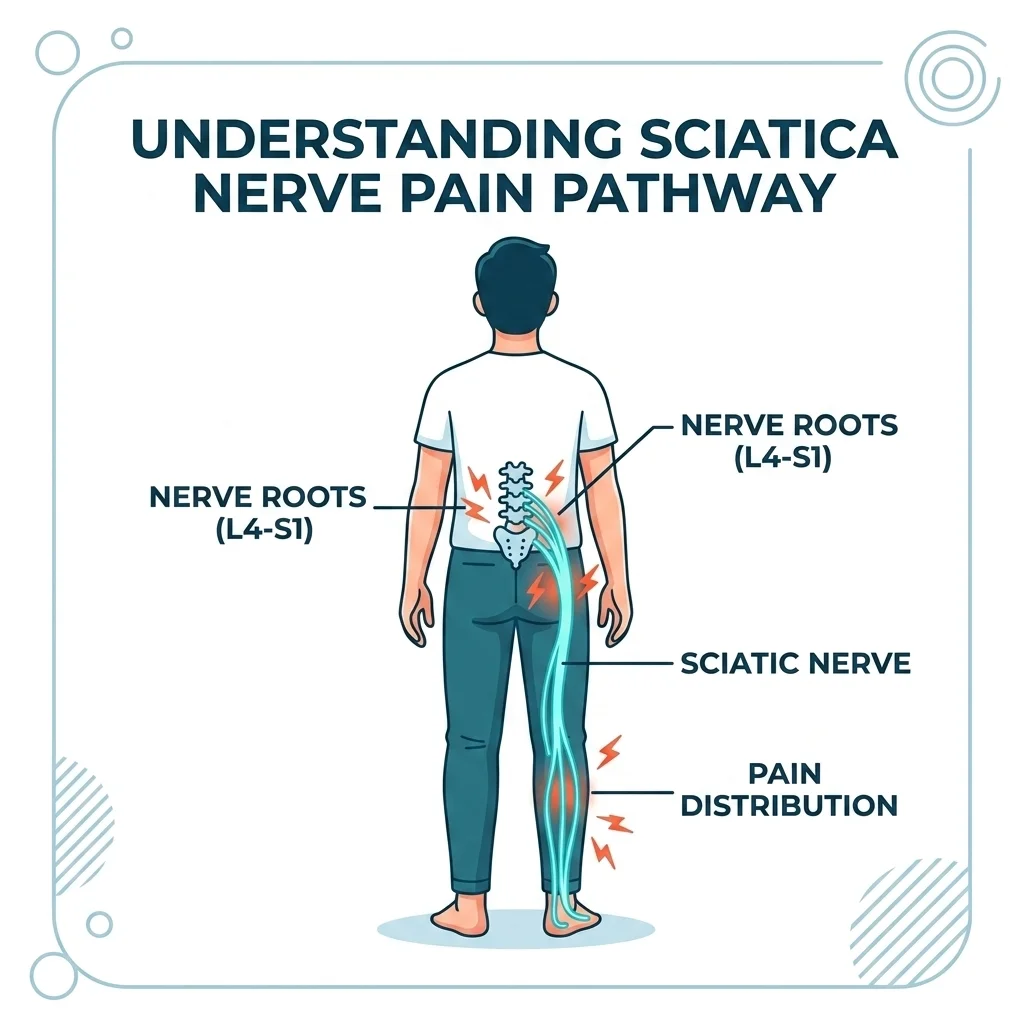
Sciatica is a term used to describe shooting pain, numbness, or tingling that travels from your lower back, through your hip, and down your leg. It occurs when the sciatic nerve—the longest nerve in your body—is compressed or irritated.
What is Actually Irritating Your Sciatic Nerve?
Sciatica can stem from a few different mechanical problems in your spine and hips:
- Slipped or Herniated Disc: This is the most common cause. A soft disc in your spine bulges out and pinches the sciatic nerve root.
- Muscle Tightness: The piriformis muscle in your buttock can become tight and compress the sciatic nerve.
- Narrowing Spine (Stenosis): The space inside your backbone narrows with age, squeezing the nerves.
Warning Signs: When to Seek Immediate Medical Attention
Go to a hospital emergency room immediately if you have leg pain along with:
- Loss of control over your bladder or bowel movements.
- Complete numbness in your groin or inner thigh area.
- Sudden, severe weakness in your foot (causing your foot to drag).
How a Physiotherapist Treats Sciatica
Most patients do not need surgery. Sciatica responds very well to conservative physical therapy. Your treatment plan will include:
- Spinal Decompression: Exercises that gently open up space in your lower back to relieve nerve pressure.
- Nerve Flossing: Soft, gliding movements that help the nerve slide smoothly through your leg muscles.
- Core and Glute Strengthening: Exercises to build strong support for your lower back to prevent the pain from returning.
Reclaim Your Mobility
With proper physiotherapy, most sciatica symptoms improve significantly within 6 to 8 weeks. At PhysioPulse, we focus on identifying the exact cause of your sciatica to build a custom recovery routine.
Experience Professional Recovery
Suffering from pain or recovering from a sports injury? Book a clinical consultation, a home visit, or a video call session with our team of SLMC registered physiotherapists.