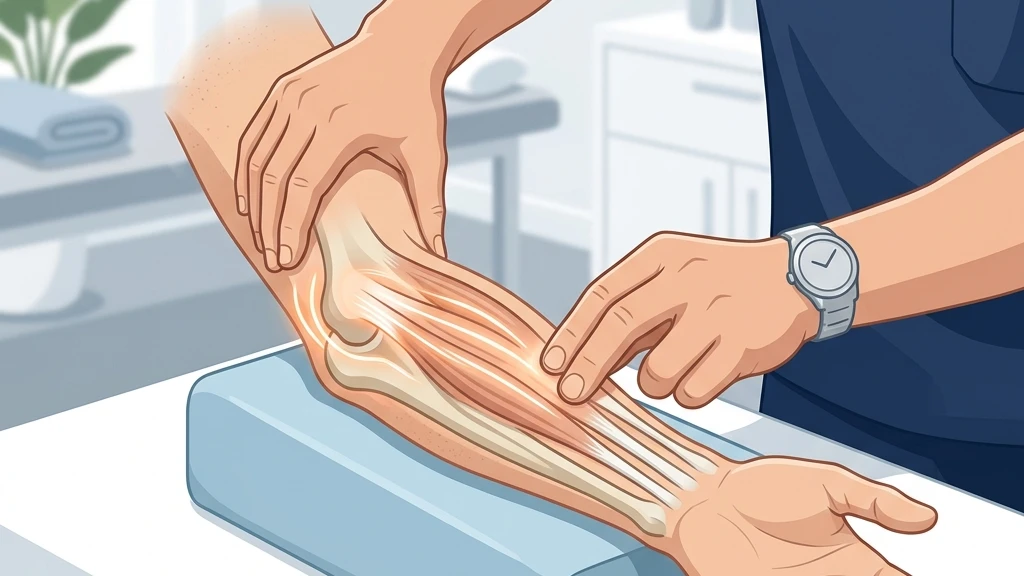
Tennis elbow, medically known as lateral epicondylitis, is a painful tendon condition that affects the outer part of the elbow. Despite its name, less than 5% of patients with tennis elbow actually play tennis. Instead, it is a common repetitive strain injury caused by overusing the forearm muscles and tendons during daily tasks like typing, cooking, painting, or gardening.
This condition can make simple daily actions—like holding a cup of tea, turning a doorknob, or lifting groceries—feel sharp and painful. Fortunately, targeted physiotherapy offers highly effective solutions to relieve tendon inflammation and restore pain-free arm strength.
What Causes Tennis Elbow?
The forearm contains muscles that extend your wrist and fingers. These muscles merge into a single tendon that attaches to a bony bump on the outside of your elbow called the lateral epicondyle.
When you repeat movements that involve gripping and wrist extension, the tendon experiences repetitive stress. Over time, this stress leads to micro-tears in the tendon fibers, causing localized inflammation, tendon thickening, and chronic pain. Common activities that trigger this condition include:
- Office Work: Typing on a computer keyboard and clicking a mouse for hours.
- Manual Work: Using screwdrivers, painting walls, or repetitive cutting.
- Sports: Poor technique in racket sports, lifting heavy weights, or throwing.
How Physiotherapy Relieves Elbow Pain
At PhysioPulse, we don't just focus on temporary pain relief. We design comprehensive rehabilitation programs that target the root cause of tendon overload:
- Tendon Decompression: Rest and avoiding aggravating activities are crucial first steps. We often recommend a specialized counterforce brace worn around the upper forearm to reduce pressure on the painful tendon attachment site.
- Manual Therapy: Deep tissue mobilization and friction massage on the extensor tendons to promote blood flow and stimulate tissue remodeling.
- Eccentric Strengthening: This is the gold standard for tendon rehab. Eccentric exercises involve strengthening the muscle while it is lengthening (e.g., slowly lowering a dumbbell with your wrist). This stimulates collagen production and repairs the tendon structure.
- Postural and Ergonomic Setup: Modifying your workstation height or tool handles to reduce the demands on your forearm muscles.
Simple Stretches for Elbow Relief
While undergoing clinical rehabilitation, you can practice these two simple movements at home:
- Wrist Extensor Stretch: Extend your arm straight out in front of you with your palm facing down. Use your other hand to gently pull your hand down toward your body until you feel a stretch along the top of your forearm. Hold for 20 seconds, repeat 3 times.
- Wrist Flexor Stretch: Extend your arm with your palm facing up. Pull your fingers down toward the floor until you feel a stretch along the bottom of your forearm. Hold for 20 seconds, repeat 3 times.
Overcome Chronic Arm Pain
Leaving tennis elbow untreated can cause the pain to become chronic, leading to tendon degeneration that takes months to heal. According to our team of SLMC registered physiotherapists, early intervention with progressive strengthening is the key to preventing long-term tendon damage. If you are struggling with outer elbow stiffness or pain, contact PhysioPulse to schedule a personalized tennis elbow assessment.
Experience Professional Recovery
Suffering from pain or recovering from a sports injury? Book a clinical consultation, a home visit, or a video call session with our team of SLMC registered physiotherapists.